

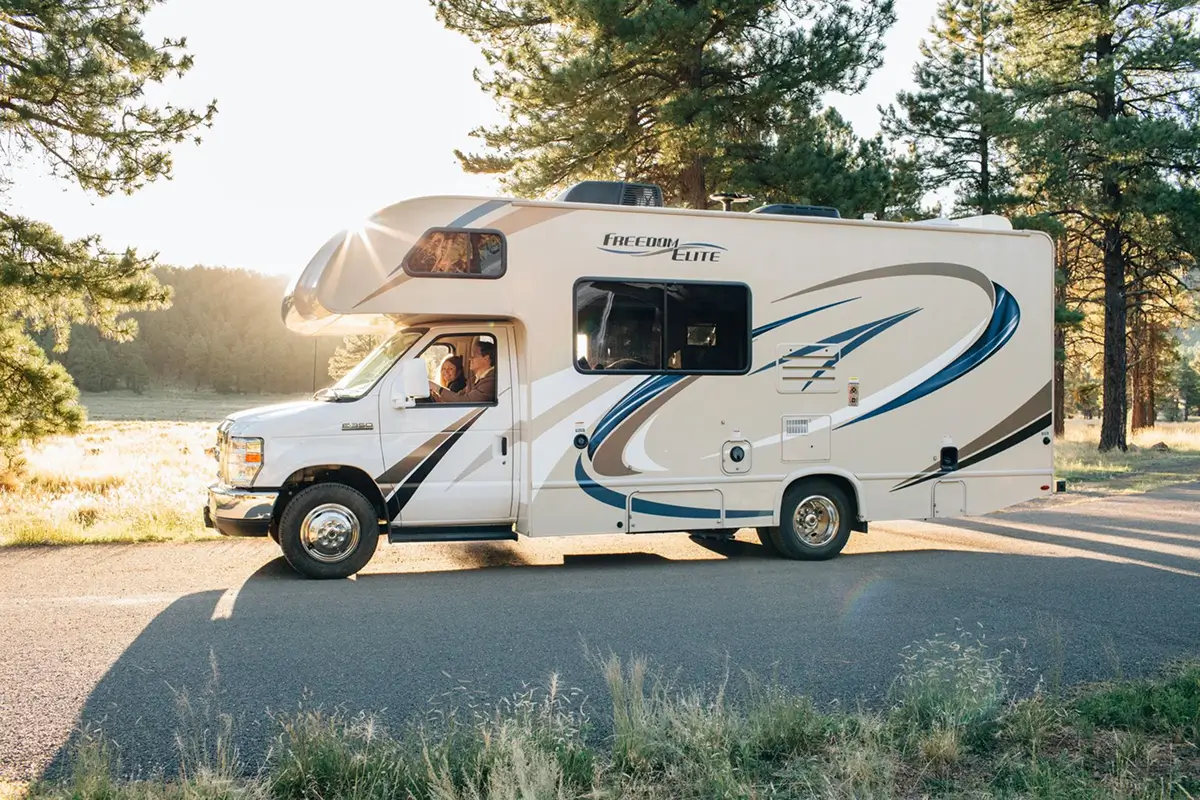
The letter usually comes within a week. You pull into your driveway with a new Class A motorhome or a 25-foot fifth wheel, and about six days later there’s an envelope from the HOA management company. Polite but firm. The RV has to go. You have 14 days.
This is the single most common reason people call us at The Hideout. Not “I need somewhere cheap” — but “I bought an RV, my HOA sent me a notice, and I need to figure this out fast.” If you’re in that situation right now, here’s exactly what you’re dealing with, what your options are, and how Naples and Marco Island RV owners handle it.
I’m Keith Basik. My family has been in Southwest Florida since the early 1970s and I own The Hideout Storage Park in Southeast Naples. We’ve helped hundreds of Collier County RV owners work through this problem. Here’s the straight answer.
What Collier County HOAs Actually Say About RV Parking
Florida law gives HOAs broad authority to regulate what’s visible and stored on residential property. The vast majority of established neighborhoods in Collier County — including the communities around Naples, Marco Island, Bonita Springs, and Estero — have covenants that prohibit parking recreational vehicles, boats, trailers, or commercial vehicles in driveways or on streets, full stop.
The specific language varies by community, but it typically reads something like: “No recreational vehicle, boat, trailer, camper, or commercial vehicle shall be stored, parked, or kept on any lot or street within the community unless stored inside a fully enclosed garage.”
The “fully enclosed garage” clause is the key. Most two-car garages are 20–22 feet deep. Most Class A and Class C motorhomes are 30–45 feet long. The garage option simply isn’t physically possible for the majority of RV owners in Naples.
Which Naples Communities Have the Strictest Rules?
Generally speaking, the more established and higher-value the community, the stricter the enforcement. Communities like Pelican Bay, Grey Oaks, Quail Creek, Talis Park, Fiddler’s Creek, Lely Resort, and most of the gated communities in East Naples have active covenant enforcement. Marco Island’s HOAs and deed restrictions are similarly tight. Communities in Golden Gate Estates are often more lenient — but even there, county ordinances and individual deed restrictions can apply.
Act Now: If you’ve received a first notice from your HOA, you typically have 14–30 days to resolve the violation. A second notice in most Collier County HOAs triggers fines — often $25–$100 per day. Don’t wait for the second letter. Secure off-site storage and send your HOA the address confirmation. The violation closes immediately.
What the Fines Actually Look Like
HOA fines in Florida are governed by state statute. Under Florida law (Chapter 720), an HOA can fine up to $100 per violation per day, capped at $1,000 per violation. Some communities levy separate fines for each day the violation continues; others issue a single fine and give you a grace period to cure it before escalating.
In practice, most Naples HOAs follow a three-step process: first notice (cure period, no fine), second notice (formal fine levied), third escalation (lien consideration for unpaid fines). Fines that go unpaid long enough can be converted to a lien against your property in Florida — which is a serious complication if you ever refinance or sell.
A month of daily $50 fines while you figure out storage is $1,500. That’s more than two months of covered storage at The Hideout. Moving the RV off-site is always cheaper than the fine math, and it closes the issue permanently.
Your Off-Site Storage Options Near Naples, FL
Once you know the RV has to leave the property, the question becomes where. Here’s how the options break down for Naples and Collier County RV owners:
Purpose-Built RV Storage Facilities
This is what The Hideout was designed for. Purpose-built RV and vehicle storage facilities have drive lanes wide enough to maneuver a 40-foot motorhome with a tow, security systems scaled to protecting high-value assets, electric hookups for battery maintenance, and 24/7 gate access for the times you want your RV at 5 a.m. on a Saturday.
Our outdoor storage spaces run $175–$230 per month depending on size — that’s for a gated, monitored space with 24/7 access and room to pull in and out cleanly. Covered spaces with 30-amp electric hookup run $386–$572 per month. For most RV owners, the outdoor or covered option is where they start.
Generic Self-Storage Facilities
Most traditional self-storage facilities weren’t built for RVs. The drive lanes are designed for moving trucks, not 40-foot motorhomes. Access hours are often limited. Electric hookup is rare. And the spaces are often sized for trailers, not Class A or Class C motorhomes. Some Extra Space and iStorage locations in Naples do have large vehicle lots, but they’re not purpose-built — access and maneuvering are common complaints.
Peer-to-Peer Storage (Neighbor, etc.)
Apps like Neighbor allow you to rent space in someone’s driveway or lot. Pricing can be very low — sometimes $50–80 per month. The tradeoffs are real, though: no guaranteed electric hookup, no 24/7 security, no formal gate system, and the space can become unavailable when the host decides they need it back. For short-term bridge storage while you find something permanent, these can work. For long-term storage of a $200,000 motorhome, most serious RV owners don’t rely on them.
Family or Friend’s Property
If someone you know has rural property or an accommodating driveway situation, this can work — but it depends entirely on their HOA rules and county zoning. Storing an RV on a friend’s property that has its own HOA restrictions doesn’t solve the problem, it just moves it. Also worth knowing: your auto insurance may or may not cover the vehicle when it’s stored on a third party’s property. Check your policy before you assume.
Pro Tip: When you inform your HOA that you’ve moved the RV to off-site storage, get it in writing. Send an email or certified letter with the storage facility name, address, and your unit number. Ask for written confirmation that the violation is closed. This protects you if there’s ever a dispute about whether the issue was resolved and when.
What RV Owners Near Naples Actually Do — The Real Workflow
Based on what we see at The Hideout, here’s the typical sequence for a Naples RV owner dealing with an HOA notice:
Week 1: Receive HOA notice. Research off-site storage options. Visit or call a purpose-built facility to confirm sizing and availability.
Week 2: Reserve the storage space. Move the RV. Send confirmation of off-site storage to HOA in writing.
Ongoing: Use the storage facility as a staging point for trips. Most of our customers pull the RV out, load it at home, and head out — then bring it back, clean it up, and drop it back at the facility. The round trip from their house to our facility and back is part of their routine.
Many customers start with outdoor storage and upgrade to covered when a covered space opens up. A smaller number — those with collector-grade motorhomes or multiple vehicles — eventually purchase a condo unit because they want dedicated, climate-controlled space they own outright.
Frequently Asked Questions: Naples HOA RV Storage Rules
Does my Naples HOA legally have the right to prohibit RV parking?
Yes. Under Florida Chapter 720, HOAs have broad authority to enforce recorded covenants and restrictions, including rules about recreational vehicle storage. If RV parking is prohibited in your community’s governing documents, the HOA can levy fines and ultimately place a lien on your property for unpaid violations. Review your HOA documents or consult a real estate attorney if you want to challenge a specific rule.
Can I apply for an HOA variance or exception for RV parking?
Some HOAs have a variance or exception process, but approvals are rare for RV parking — particularly in communities where the restriction exists specifically to maintain property values and street appearance. You can request a hearing, but plan for off-site storage as your primary solution rather than banking on an exception being granted.
How close is The Hideout Storage Park to central Naples?
We’re located 4 miles east of the intersection of US-41 and Collier Blvd, on the northside of US-41 (Tamiami Trail) in Southeast Naples. That puts us about 15–20 minutes from most Naples zip codes and roughly 25 minutes from Marco Island. Most customers make the drop-off and pickup part of their pre-trip and post-trip routine without issue.
Do you have spaces for Class A motorhomes?
Yes. We accommodate Class A motorhomes, Class C motorhomes, fifth wheels, travel trailers, toy haulers, and large boat trailers. Our outdoor spaces and covered spaces are designed with wide drive lanes for maneuvering larger vehicles. Contact us to confirm space availability for your specific RV length and tow vehicle before reserving.
What if I need to access my RV outside of normal business hours?
The Hideout is accessible 24 hours a day, 7 days a week via your personal gate access code. We also have a remote gate app so you can open the entrance from your phone. There are no hour restrictions — if you decide you want to leave for a camping trip at 4 a.m., the gate opens.
Is there electric hookup available for RV batteries while in storage?
Yes. All 120 covered spaces include 30-amp electric service, which is ideal for running a battery tender or maintaining a trickle charge on your RV’s house batteries during storage. Outdoor spaces do not include electric service. If maintaining battery charge is important to you, a covered space is the right call.
The HOA Notice Is Actually Good News — Here’s Why
It sounds strange, but most of our long-term customers are glad the HOA letter forced the conversation. Leaving an RV in your driveway isn’t great for the vehicle — it’s exposed to full sun, rain, and the kind of salt air that does real damage over Southwest Florida’s summer season. A purpose-built storage facility with electric hookup and overhead protection is genuinely better for the vehicle than a home driveway.
The HOA problem and the storage-quality problem have the same solution. And at $175–$230 per month for outdoor storage, the cost is less than a single annual RV service appointment.
Call The Hideout Storage Park: (239) 213-8029
4 miles east of US-41 & Collier Blvd • Southeast Naples, FL
Reserve online: thehideoutstoragepark.com
→ Covered Storage with 30-Amp Electric
→ Also Read: What Florida’s Sun Does to Your RV
