

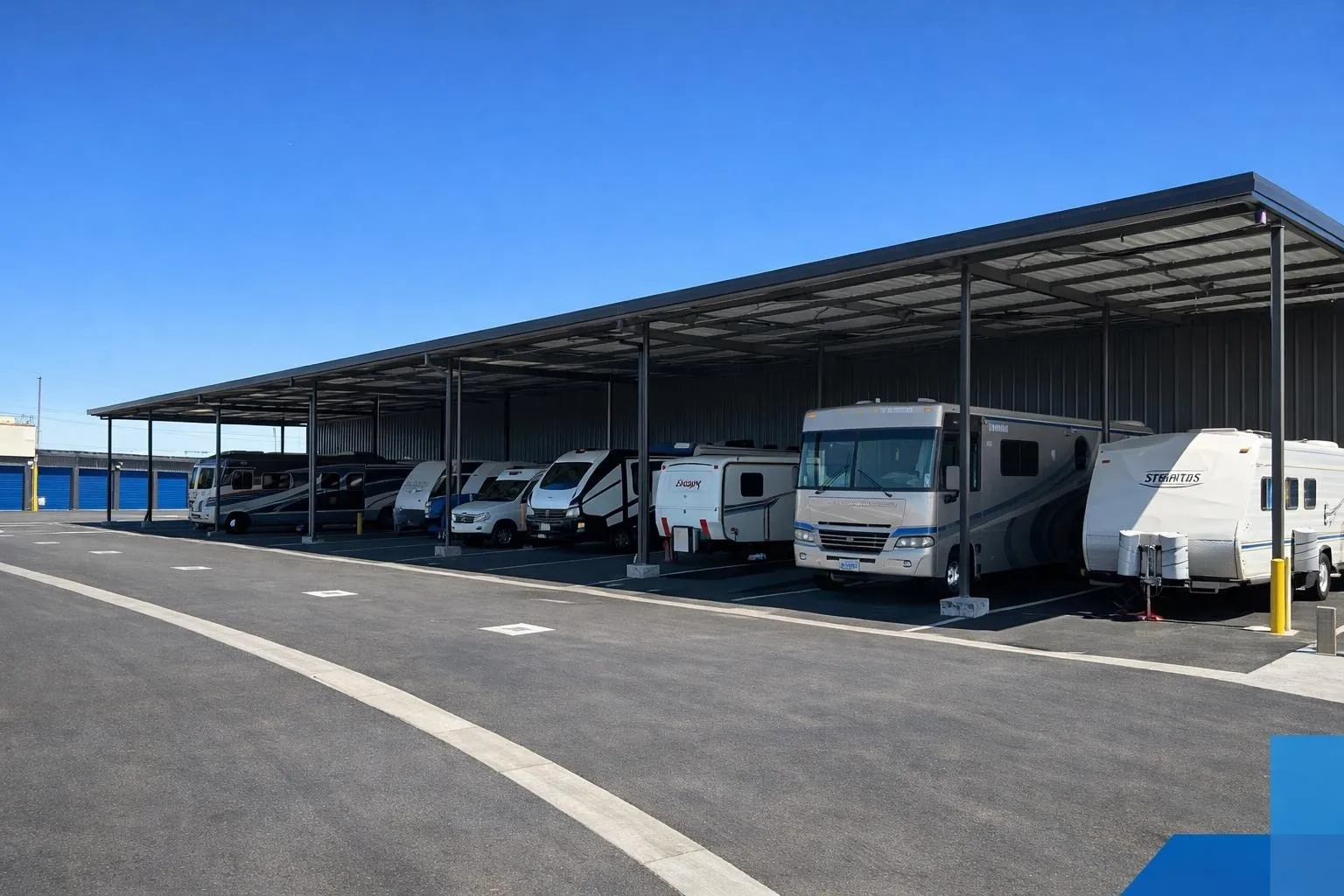
An RV roof fails slowly and invisibly, and by the time a stain appears on a ceiling panel the water has usually been in the walls for months. Inspect the seams two to four times a year, reseal them before they crack rather than after, keep the roof clean, and park it under cover if you can. In Southwest Florida the UV and the daily storm cycle age a roof faster than almost anywhere, which is the main argument for a covered bay.
Nothing else on an RV writes it off the way a roof leak does. Engines get rebuilt and appliances get replaced, but water in the walls rots the structure, and a rig with soft sidewalls is finished regardless of how good everything else is.
What maintenance does an RV roof need?
Three things on a schedule: inspect the seams and sealant two to four times a year, wash the roof with a cleaner appropriate to its material, and reseal any sealant that has cracked, lifted or gone chalky. The sealant is the part that fails, not usually the roof membrane itself.
Inspection means looking closely at every penetration, because that is where water gets in. Air conditioner shroud, roof vents, skylight, antenna, solar mounts, plumbing vents, refrigerator vent, and the front and rear seams where the roof meets the walls. Run a finger along the sealant bead. If it is hard, cracked, pulling away at the edges or chalky, it is due.
Washing matters more than people think, because dirt and organic growth hold moisture against the surface and accelerate breakdown. What you wash with depends on the membrane, and using the wrong product, particularly anything petroleum-based on EPDM rubber, does real damage.
Why does Florida take years off an RV roof?
Constant high UV, daily heating and cooling cycles, and afternoon storms that soak a roof which then bakes dry within the hour. That combination works sealant harder than steady heat or steady wet would on their own, because every expansion and contraction cycle opens and closes micro-cracks at exactly the places that are meant to be watertight.
Northern rigs get a hard winter and then a long mild recovery. A rig parked in Naples gets no recovery period at all. Add salt in the air near the coast and you are also working on the fasteners and the metal trim that the sealant is bonded to.
This is why covered storage is a different proposition here than it is in a mild climate. Shade removes most of the UV load and most of the thermal cycling, which are the two mechanisms doing the damage. Our comparison of climate-controlled, covered and outdoor storage sets out the three products, and the Florida sun and The Hideout Storage Park covers the broader effect on a parked vehicle.
How often do RV roofs need to be resealed?
Reseal on condition rather than on a fixed calendar, which in practice means inspecting a few times a year and resealing whatever has failed. Most owners end up touching up some sealant annually and doing a larger reseal every few years, but a roof in Florida sun will want attention sooner than the same roof in a mild climate.
Do not simply pile new sealant on top of old failed sealant. Where a bead has properly degraded it needs removing back to a sound surface so the new material bonds to the roof rather than to a layer that is already letting go. A thick stack of mismatched sealant is a common sight on used RVs and it is usually hiding a problem rather than solving one.
Compatibility matters as well. Sealants are formulated for specific roof materials, and self-leveling products are for horizontal surfaces while non-sag products are for vertical ones. Check what your roof is made of before buying anything, which brings us to the next question.
What kind of roof does your RV have?
Most RV roofs are one of four materials: EPDM rubber, TPO, fiberglass or aluminum, and the cleaning products, sealants and expected behavior differ for each. EPDM chalks as it ages, which is normal rather than a fault. TPO is more rigid and tends to show seam issues rather than surface chalking. Fiberglass and aluminum behave differently again.
Identifying yours is worth ten minutes, because almost every product you will buy is material-specific and the wrong choice can shorten the roof’s life rather than extending it. If the manual is long gone, the manufacturer or a dealer can usually tell you from the model and year.
What does an RV roof leak actually cost to fix?
Far more than the maintenance that would have prevented it, because the sealant is cheap and the structural repair is not. A reseal is an afternoon and a few tubes of the right product. Water that has reached the framing, the insulation and the interior panels means removing and rebuilding sections of wall or ceiling, and that is where RV roof repair becomes genuinely expensive.
The asymmetry is the whole argument. There is no version of this where skipping the inspection saves money. Get a quote for your specific rig rather than working from an average, because the cost depends entirely on how far the water travelled before anyone noticed.
Signs to take seriously: a soft or spongy spot underfoot on the roof, a stain or discoloration on an interior ceiling panel, a musty smell that does not clear, delamination or bubbling on an exterior wall, and any sealant that has visibly pulled away. Any of those means stop and investigate rather than wait for the next scheduled check.
Storage choice is roof maintenance
Where the RV lives between trips does more for the roof than anything you buy. Covered bays remove most of the UV and most of the thermal cycling. Power at the bay lets you work up there with a light and run a vacuum. Access that is genuinely around the clock means the inspection actually happens instead of being postponed to a weekend that never comes.
At The Hideout, covered bays come in 12′ x 25′, 12′ x 40′, 12′ x 60′ and 12′ x 80′ with 30 amp electric and a canopy, and outdoor spaces take the oversized rigs. Outdoor runs $175 to $230 per month and covered runs $375 to $620 per month plus tax, with no contract required on outdoor spaces. Access is 24/7 through a mobile gate app, the site is gated with AI-powered security cameras, the drive aisles are wide, and there is an onsite wash area. The facility was named Toy Storage Nation’s Facility of the Month in March 2026.
Pair the roof check with the rest of a monthly visit. Our guide to RV generator maintenance in storage covers the exercise run, the complete Southwest Florida RV storage checklist covers layup, and RV storage costs in Naples covers pricing. For towables, see travel trailer and fifth wheel storage.
Frequently asked questions
What is the average lifespan of an RV roof?
It depends on the material and almost entirely on how it was maintained and where it was parked, so there is no single number worth quoting. What is consistent is that a roof inspected and resealed on condition lasts dramatically longer than one left alone, and that constant UV exposure shortens the working life of the sealant long before the membrane itself wears out.
Can I use Dawn dish soap to wash my RV roof?
It is not the right product. Dish soap is not formulated for roof membranes and can strip protective coatings, and on EPDM rubber anything petroleum-based causes real damage. Use a cleaner specified for your roof material, and check what that material is before buying.
How do I know if my RV roof is leaking?
Look for a stain or discoloration on an interior ceiling panel, a soft or spongy area underfoot on the roof, a musty smell that does not clear, or bubbling and delamination on an exterior wall. By the time any of those show, water has usually been getting in for a while, which is why scheduled seam inspection beats waiting for symptoms.
Is covered storage worth it just for the roof?
In Florida, it is the single biggest thing you can do for a roof short of resealing it on schedule, because shade removes most of the UV load and most of the daily thermal cycling that breaks sealant down. Whether the monthly difference is worth it depends on the rig’s value, but the roof is where the saving shows up.
Should I walk on my RV roof?
Only if the roof is rated to be walked on, which not all are, and only where it is supported. Check the manual first. If it is not walkable, or you are unsure, inspect from a ladder at the edges and use a pole-mounted camera or a phone on a stick for the middle rather than risking a foot through the panel.
Keep the roof out of the sun
The Hideout Storage Park has covered bays with canopies and 30 amp electric, outdoor spaces for oversized rigs and 24/7 access at 195 Basik Dr., Naples, FL 34114. Call (239) 213-8029 or contact us for availability. We serve Naples, Marco Island and Bonita Springs, listed on the service areas page.
