

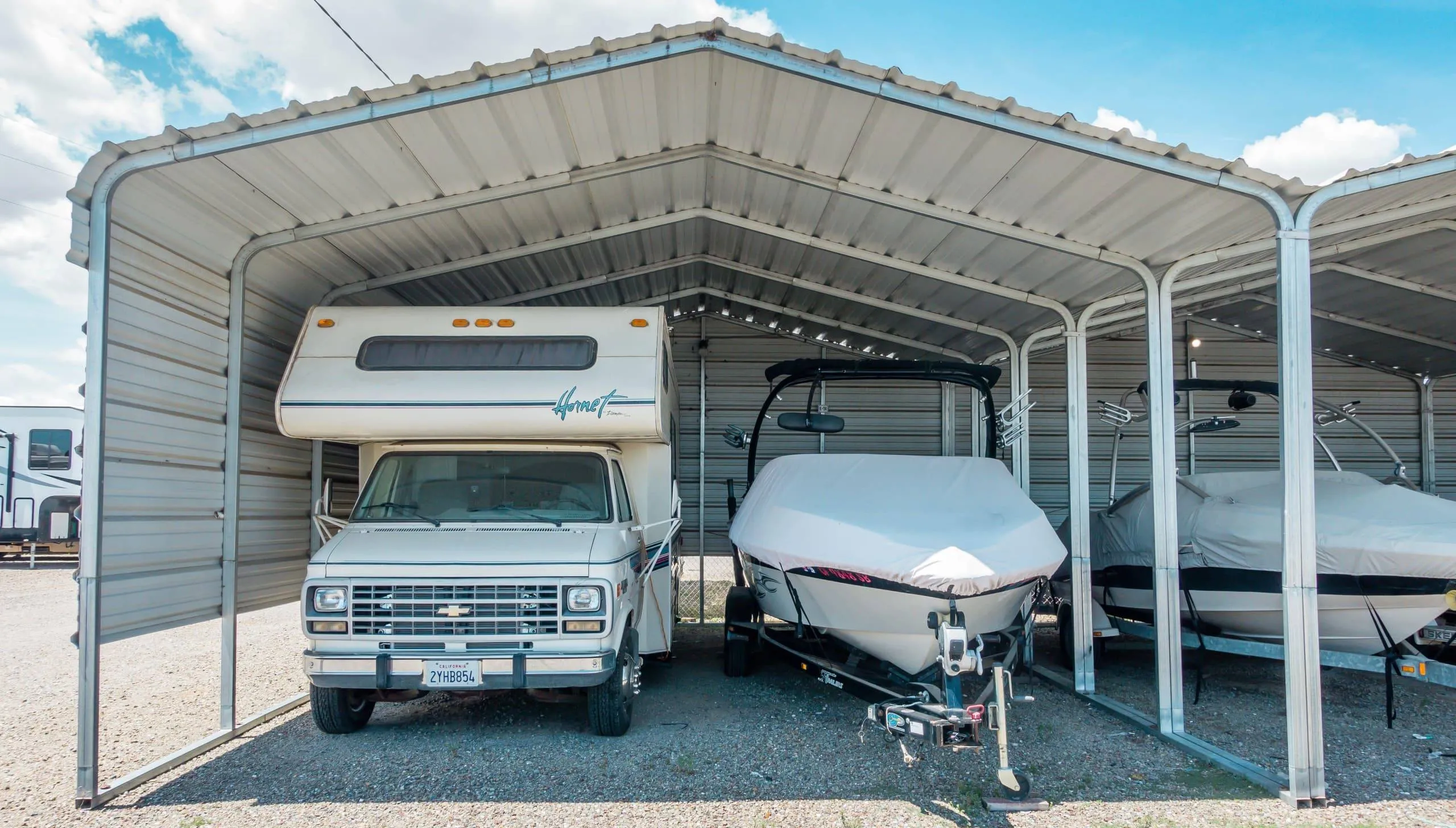
TL;DR: Barnacles and marine growth attach to any hull left sitting in warm Southwest Florida water, and once they do, the only fix is cleaning. Boat bottom cleaning is done either by a diver in the water or on the hard after a haul out. The cheaper answer is not to give them the chance: a boat kept on its trailer at a dry facility like The Hideout Storage Park never stays submerged long enough for growth to take hold.
Every boater in Naples and on Marco Island eventually has the same conversation. The boat feels slower, fuel burn is up, and someone suggests getting a diver out. This is what is actually happening under the waterline, what cleaning involves, and the option most people do not weigh properly.
Why do barnacles grow so fast on boats in Southwest Florida?
Warm water and year-round growing conditions. There is no winter here to slow marine life down, so a hull left in the water grows a biofilm within days and hard growth within weeks, rather than over a season as it might further north. Boats used infrequently are hit hardest, because a moving hull sheds early growth that a stationary one does not.
Barnacles are one of a group of organisms that attach to submerged surfaces. UF/IFAS describes marine gear as vulnerable to fouling organisms, such as sea squirts, barnacles, natural oyster set, and various types of algae, which attach to the gear and product, and notes that growers control them by routinely drying the gear through aerial exposure to desiccate the fouling organisms.
That last point is the whole argument of this post. Drying kills fouling organisms. A hull that spends its week out of the water is being treated the same way, continuously and for free.
What is the best way to clean the bottom of a boat?
It depends on whether the boat is in the water or out of it. In the water, a diver scrubs the hull with pads and brushes chosen to match the antifouling paint, working the running gear and transducers by hand. Out of the water, the hull is pressure washed soon after haul out while growth is still soft, which is faster, more thorough and easier on the paint.
The out-of-water version wins on results almost every time. Growth that has dried is brittle and comes off; growth still wet and alive is tenacious. The catch is that hauling a boat specifically to clean it only makes sense if the boat is trailerable or already scheduled for a lift.
Underwater hull cleaning has one other complication worth knowing: aggressive scrubbing strips antifouling paint along with the growth, which shortens the paint’s life and releases it into the water. A good diver adjusts pressure for the paint type. A cheap one does not, and you pay for it at the next haul out.
How do you remove barnacles from a boat?
Hard barnacles are removed mechanically, with a plastic or wooden scraper worked flat against the hull so it lifts the base plate without gouging the gelcoat, followed by a stiff brush and a rinse. Doing it within a day or two of haul out, while the growth is still soft, takes a fraction of the effort of doing it a week later.
Do not reach for a metal scraper on fiberglass. It will remove barnacles and gelcoat in the same stroke, and gelcoat repair costs more than the cleaning ever would. On running gear and props, where the metal is harder, more aggressive tools are acceptable, but the hull is not the place for them.
For the routine wash that keeps topsides and hull in shape between trips, we covered the process in tips and tricks for boat storage and washing your boat. The Hideout has an onsite wash area, which is the practical place to do this after a day on the water.
What does marine growth actually cost you?
Fuel, speed and hardware, in that order. A fouled hull increases drag, so the engine works harder for the same speed and burns more fuel to get there. Growth on the running gear and props makes it worse than hull growth alone. Left long enough, barnacles on metal components and in raw water intakes cause problems that outlast the cleaning.
Then there is the cleaning bill itself, which is recurring. A boat kept in the water in this climate needs attention on a schedule, not when you notice it. A boat kept dry does not, which is a cost most comparisons between a wet slip and dry storage leave out entirely. Our Naples boat storage pricing guide and our look at where to store your boat near Naples and Marco Island cover the rest of that comparison.
Where do you get boat bottom cleaning near me?
In Naples and Marco Island, in-water cleaning is handled by independent dive services who work marina slips on a recurring schedule, and out-of-water cleaning happens at boat yards during a haul out or at home after you trailer the boat back. Most owners with a trailered boat do the rinse themselves and call a professional only for annual work.
If you keep the boat on a trailer, the whole question gets smaller. The Hideout stores boats out of the water at 195 Basik Dr. in Naples, with an onsite wash area, an onsite boat mechanic, detailing and electrical work available, plus 24/7 access through the mobile gate app, gated entry, AI-powered security cameras and wide drive aisles. The facility was named Toy Storage Nation’s Facility of the Month in March 2026. We serve Naples, Marco Island and Bonita Springs, listed on our service areas page.
The honest comparison
A wet slip is the right answer if you use the boat several times a week, or if it is too large to trailer. Accept the recurring cleaning as part of the cost and budget for it.
Dry storage is the right answer for almost everyone else. No growth, no dive bill, no antifouling paint cycle, and the boat is on its trailer and movable when a storm is named, which we covered in our guide to hurricane boat storage. Our comparison of covered, outdoor and climate-controlled storage covers which dry option suits which boat.
Frequently asked questions
How much does it cost to clean the bottom of a boat?
In-water dive cleaning is normally quoted per foot on a recurring schedule, and out-of-water cleaning is usually part of a haul out and pressure wash. Prices vary by boat size, growth level and how long since the last clean, so get a quote for your specific boat rather than working from an average.
Can I use Dawn dish soap to wash my fiberglass boat?
For an occasional wash it will not destroy anything, but it is not the right product. Dish soap strips wax along with the dirt, which leaves the gelcoat less protected against Florida sun each time. A marine boat wash is formulated to clean without pulling the wax off.
How often does a boat bottom need cleaning in Florida?
A boat kept in warm Florida water typically needs attention on a recurring schedule rather than once a year, and the interval shortens the less the boat is used. A boat stored out of the water does not accumulate growth at all and needs only a rinse after use.
Does dry storage completely prevent barnacles?
It prevents new growth, because the organisms cannot attach to a hull that is not submerged. Growth already attached before the boat came out still has to be removed, so clean the hull once at the start of dry storage rather than assuming it will fall off.
Is underwater hull cleaning bad for antifouling paint?
It can be. Scrubbing removes paint along with the growth, and aggressive cleaning shortens the paint’s working life. Ask any diver which pads they use for your paint type before booking, and treat a very low quote as a signal about method rather than a bargain.
Keep the boat out of the water
Call The Hideout Storage Park at (239) 213-8029 or contact us to check bay availability for your boat and trailer. We are at 195 Basik Dr., Naples, FL 34114. See all storage options or browse the gallery.
