

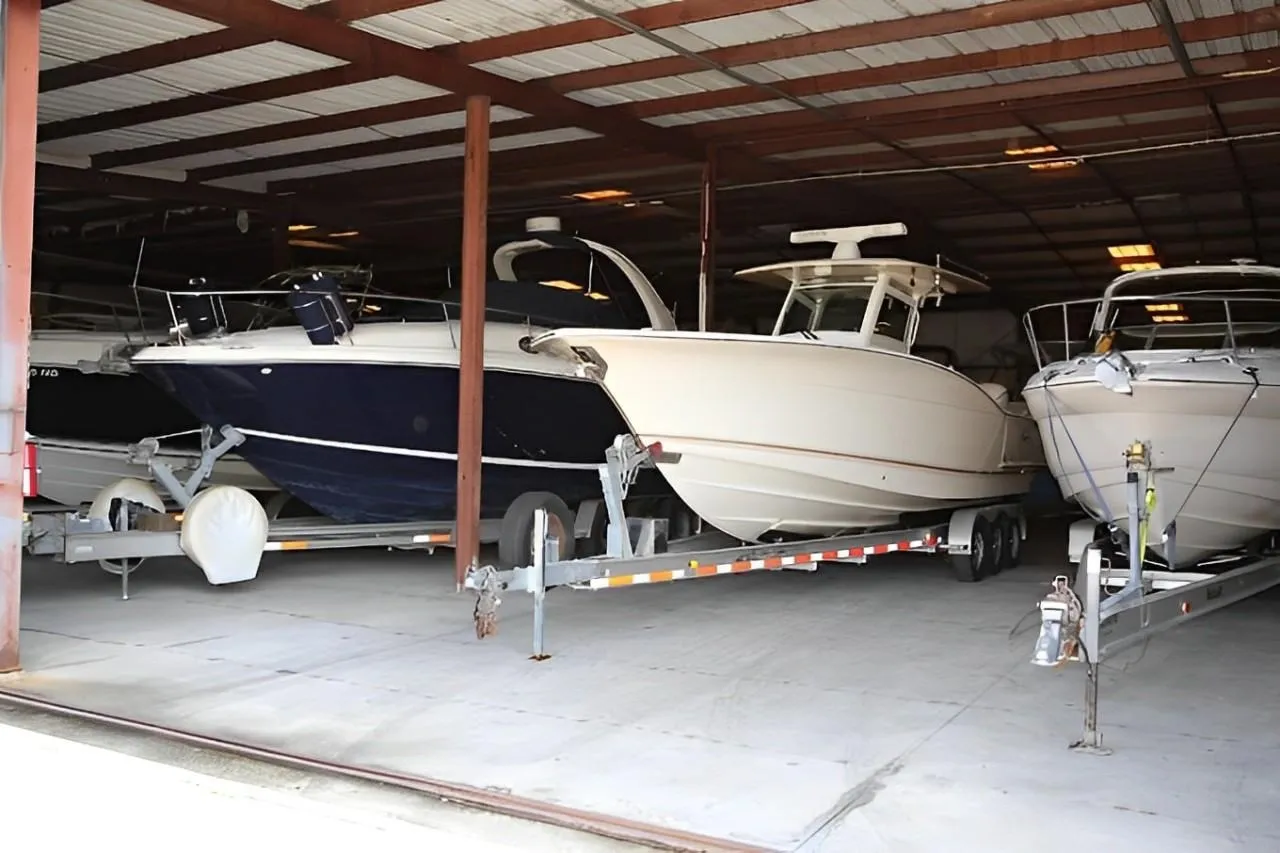
Slide outs fail from sitting still more often than from being used. Seals take a set and crack, lubricant dries out, dirt bakes onto the rails and the mechanism seizes, all while the RV is parked. Cycle the slides a few times a year even in storage, keep the seals conditioned and the rails clean, and the single most expensive repair on a parked RV mostly stops happening. Somewhere with power and room to work makes that realistic.
A slide out is a hole cut in the side of your RV with a moving wall in it, kept dry by a rubber seal and moved by a mechanism carrying a lot of weight. When it works you forget about it. When it does not, you have a rig you cannot safely travel in and a repair bill with a comma in it.
What are the most common problems with RV slide outs?
Seal failure, dried or contaminated lubricant on the rails, motor or gear failure, and the slide going out of adjustment so it no longer seats squarely. Most of these start as a small symptom, a slide that moves unevenly, groans, or needs a second try, and most owners wait until it stops entirely.
Seals are the most common and the most preventable. The bulb and wiper seals around a slide are rubber in constant sunlight, and rubber that is never conditioned goes hard, loses its shape and stops sealing. Once water gets past a seal it runs into the floor structure under the slide, which is one of the places water damage is both expensive and hard to see.
Mechanism problems usually trace back to the rails. Grit, leaf litter and baked-on dirt get dragged in and out with the slide, grinding the surfaces and loading the motor. Keeping the rails clean does more than any lubricant you can buy.
Should you lubricate RV slide outs, and with what?
Yes, but what you use depends on the mechanism, and the wrong product attracts dirt and makes things worse. Rubber seals want a rubber conditioner or a silicone-based seal treatment. Metal rails and gears generally want a dry lubricant on through-frame and rack-and-pinion systems, because a wet, sticky product collects grit.
The standard mistake is spraying a general-purpose penetrating oil on everything. It is not a lubricant for this job, it can attack rubber, and it turns rails into a dirt magnet. Check what mechanism your rig has before you buy anything, because manufacturers publish specific guidance and the systems genuinely differ.
Clean before you lubricate, every time. Lubricant over grit is an abrasive paste, which is the opposite of the intended effect.
How do you look after RV slide out seals?
Clean them with mild soap and water, let them dry, then treat them with a rubber conditioner or dry lubricant intended for RV seals, a few times a year. Conditioned seals stay flexible, keep their shape and keep water out. Neglected ones harden, flatten where the slide rests, and crack.
Two Florida-specific points. Heat and UV age these seals faster than a mild climate does, so the interval that works in the north is too long here. And a slide left retracted for months with the seal compressed in the same position takes a set, which is why cycling matters as much as conditioning.
Check for daylight. With the slide out, look along the seal from inside in a dark rig with the sun on that side. Any light you can see is water you will get later. Also look underneath the slide floor for staining, which is the earliest honest sign that a seal has been letting water through.
Should you cycle the slides while the RV is in storage?
Yes. Running the slides fully out and fully back in a few times a year keeps the seals from taking a permanent set, redistributes lubricant along the rails, confirms the motor and controller still work, and surfaces a developing problem while it is still cheap. A slide that has not moved in eight months is the one that fails on the first trip.
Do it with the RV level and the power supply strong, because slides draw heavily and a weak battery can stall a motor partway. That is one of the practical arguments for a bay with electric: our covered bays include 30 amp electric, which means you are running the slide on shore power rather than on a battery that has been sitting since spring.
Give it room. A slide needs clearance on that side, which is worth checking before you book a bay rather than discovering it when the slide hits the neighbor’s awning. If you are sizing a bay, our RV, boat and trailer storage size guide covers measuring, and travel trailer and fifth wheel storage covers towables.
How much does it cost to repair a slide out on an RV?
It ranges from a seal replacement, which is a modest parts-and-labor job, up to motor, gear or rail replacement and structural repair where water has got into the floor, which is in a different class entirely. The variable is not really the mechanism, it is whether water reached the structure before anyone noticed.
Get a quote against your specific rig and mechanism rather than working from an average, because a through-frame system, a rack-and-pinion system and a hydraulic system are different jobs. What is consistent is the asymmetry: seal conditioning and a few cycles a year cost almost nothing against a repair that can run into four figures.
This is the same logic as the roof, and for the same reason. We wrote that one up in RV roof maintenance in Florida sun, and the two checks belong on the same visit.
Make it part of one monthly trip
Cycle the slides fully out and back. Wipe the rails and look for grit. Check the seals for cracking, flattening and daylight. Look under the slide floor for staining. While you are there, run the generator under load, which our guide to RV generator maintenance in storage covers, walk the roof seams, and check the tires.
That is one trip covering everything that quietly fails on a parked RV in this climate. At The Hideout you can do it whenever suits, with 24/7 access through a mobile gate app, gated entry, AI-powered security cameras, wide drive aisles and an onsite wash area. Outdoor spaces run $175 to $230 per month and covered bays run $375 to $620 per month plus tax, with no contract required on outdoor spaces. The facility was named Toy Storage Nation’s Facility of the Month in March 2026, and we serve Naples, Marco Island and Bonita Springs. Pricing across products is in our RV storage cost guide and the storage options page.
Frequently asked questions
What is the best lubricant for RV slide-outs?
It depends on the mechanism, so check your manufacturer’s guidance before buying. As a general rule, rubber seals want a silicone or rubber conditioner, and metal rails on through-frame and rack-and-pinion systems usually want a dry lubricant that does not attract grit. General-purpose penetrating oil is the wrong product and can damage rubber.
Should you lubricate RV slide outs?
Yes, but clean first and match the product to the part. Lubricant applied over grit becomes an abrasive paste and wears the rails faster than no lubricant at all. Seals get a conditioner, rails get what the manufacturer specifies, and both want doing a few times a year rather than annually in Florida heat.
Can I leave my slides in while the RV is in storage?
Leave them retracted between visits, which protects the seals and the mechanism from weather, but cycle them fully out and back a few times a year. A seal held compressed in one position for months takes a permanent set and stops sealing, which is the failure that long-term storage causes.
How do I know if a slide out seal is leaking?
Look along the seal from inside with the slide out and the sun on that side: any daylight is a gap. Then check underneath the slide floor and the interior corners for staining, a musty smell or soft flooring. Seal leaks show up below the slide before they show up anywhere obvious.
Do slide outs need to be level to operate?
Yes, as close to level as you can get. Operating a slide on a significant slope loads the mechanism unevenly and can push it out of adjustment over time. Level the RV before cycling the slides, including when you are only running them in storage for maintenance.
Somewhere with power, room and access
The Hideout Storage Park has covered bays with 30 amp electric, outdoor spaces, wide aisles and 24/7 access at 195 Basik Dr., Naples, FL 34114. Call (239) 213-8029 or contact us to check what fits your rig.
