

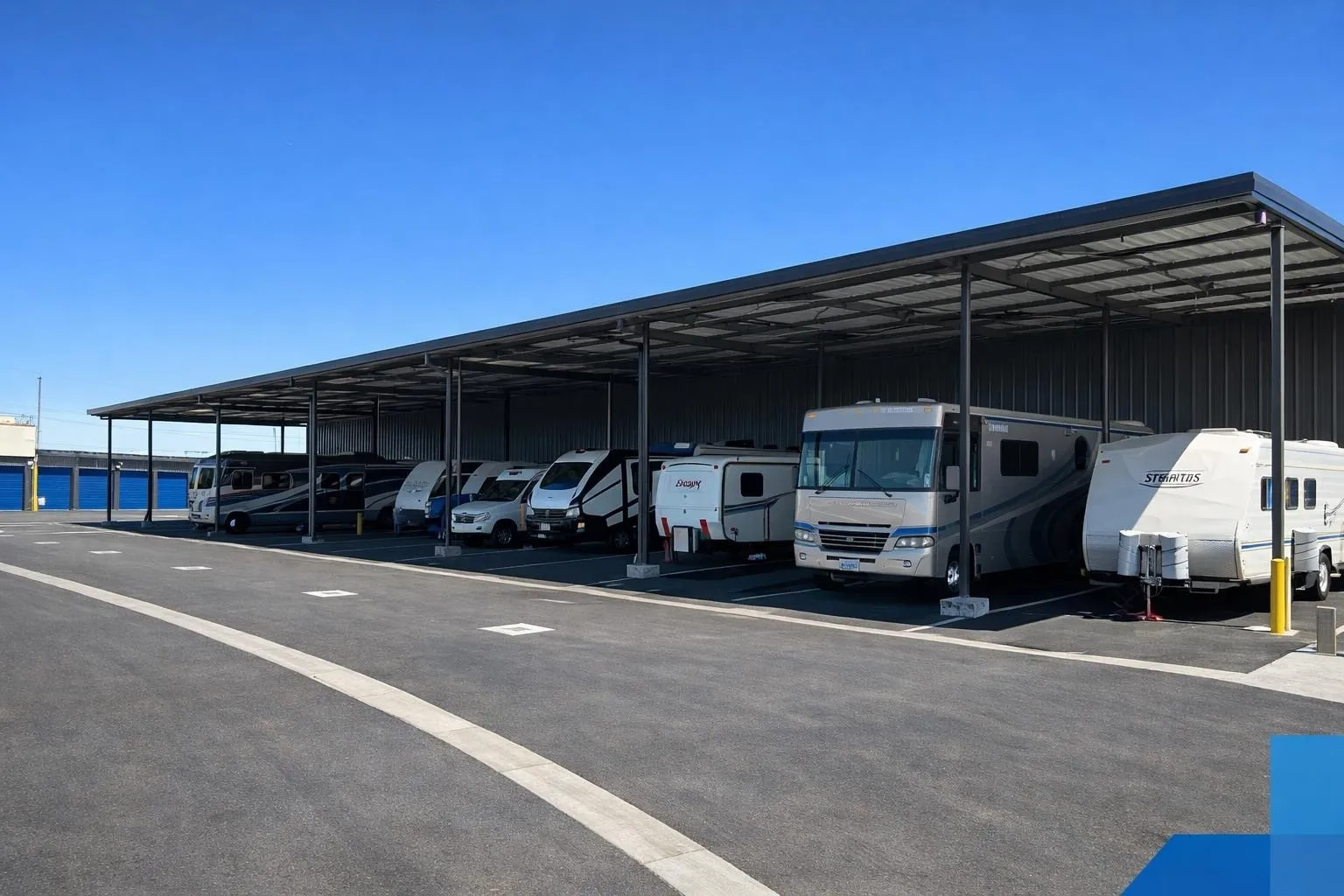
Here’s the short answer: real RV storage security comes down to controlled access, active monitoring, and a facility layout that doesn’t leave blind spots — not a padlock and a promise. Anyone shopping for RV storage security features should be evaluating those three things specifically, because a facility’s marketing language (“secure,” “world-class,” “gated”) means very little without knowing what’s actually behind it.
An RV is one of the largest purchases most owners will ever make, and it typically sits unattended for weeks or months at a time between trips — especially for Naples and Marco Island owners storing seasonally around the snowbird calendar. That combination of high value and low owner visibility is exactly why storage security deserves more scrutiny than most people give it before signing a rental agreement.
Why RV Storage Security Actually Matters
Storing an RV off-site solves a real problem for a lot of Collier County owners — many local HOAs simply don’t allow RVs or boats to be parked at home, which pushes owners toward dedicated storage whether they were planning to use it or not. But moving the vehicle off your own property also means you’re trusting someone else’s security setup instead of your own driveway, garage, or line of sight.
That trust has real financial weight behind it. An RV represents tens of thousands of dollars sitting in one place, often for months between uses. If something goes wrong — a break-in, vandalism, a hit-and-run in a cramped storage lane — you generally find out about it well after the fact, not in real time. That’s the core case for secure RV storage: the facility’s security is doing the watching when you can’t.
It’s also worth separating two different risks that get lumped together under “storage security”: deliberate theft/break-ins, and accidental damage from tight, poorly designed lots where other renters are backing 35-foot rigs past your unit every week. A facility can solve for one and completely ignore the other. Good RV storage security addresses both.
The Core Features That Actually Matter (Not Just Marketing Language)
When you’re comparing facilities, here’s what to actually look for — regardless of which storage park you end up choosing.
1. Controlled, verifiable gated access.
A gate is only a security feature if it actually restricts who can get through it. Look for facilities that use individually assigned access — a code, a fob, or ideally a mobile app tied to your account — rather than a single shared gate code that gets handed around and never changes. Gated RV storage with per-user access also creates an entry log, which matters if you ever need to establish who was on-site and when.
2. Active video monitoring, not just a camera on a pole.
There’s a real difference between a camera that records to a hard drive nobody checks and a monitored system built to actually flag activity. Ask specifically whether the cameras are AI-assisted or actively monitored, how long footage is retained, and whether coverage extends to individual storage rows — not just the main gate.
3. Site layout that eliminates blind spots.
This is the feature most owners never think to ask about. Narrow, cluttered storage lanes create sightline gaps that both cameras and casual observation miss — and they also cause a disproportionate share of RV storage damage from other tenants maneuvering oversized rigs in tight quarters. Wide, well-organized drive aisles reduce both risks at once.
4. No-contract flexibility to test a facility before committing.
This one is easy to overlook, but it’s a practical security feature in its own right: a facility that lets you store month-to-month means you can evaluate how the gate access, camera coverage, and overall operation actually perform before locking into a long-term agreement.
5. On-site presence during business hours.
A facility that runs on-site services — mechanics, detailing, a wash bay — has staff physically present during the day in a way that a purely automated, unstaffed lot doesn’t. That’s a soft security layer worth factoring in, even if it isn’t a formal patrol program.
How The Hideout Storage Park Approaches Security
The Hideout Storage Park is built around the two features above that matter most: controlled access and active monitoring.
Access is managed through a mobile gate app, giving owners 24/7 entry without a shared code that circulates beyond the people who should have it. The facility also uses AI-powered security cameras — a feature specifically called out when The Hideout was named Toy Storage Nation’s Facility of the Month in March 2026, an industry recognition that cited the property’s premium amenities, security, and customer experience.
Beyond access and cameras, The Hideout’s storage lots are designed with wide drive aisles and generous turning radius — built for the reality that most vehicles on-site are oversized RVs, boats, and trailers, not standard cars. That layout choice directly reduces the blind-spot and collision risk described above, on top of simply making the lot easier to navigate.
Both storage tiers benefit from this same access and monitoring setup:
- Outdoor storage ($175–$230/mo) — open-lot parking with full gate and camera coverage, no contract required.
- Covered storage ($386–$572/mo) — canopy protection plus 30-amp hookups, on the same secured site.
Owners who want the most control over their space long-term can look at Elite Storage Condos — deeded, privately owned units — or the covered storage condo option, both inside the same gated, monitored property. The Hideout also offers car storage and long-term car storage under the same security setup for owners protecting a collector vehicle rather than an RV.
[VERIFY: perimeter fencing specifications, lighting details, and whether on-site staff conduct any formal patrol schedule — not confirmed in current site copy or CLIENT.md; do not add these claims to the live version without confirmation.]
Questions to Ask Any Facility Before You Sign
Whether or not you store with The Hideout, use this checklist on any facility you’re considering — it’s how you separate a real security program from a sign that says “secure”:
- Is gate access tied to an individual account, or is it a shared code?
- Are the cameras actively monitored or AI-flagged, or do they just record to storage that nobody reviews?
- How wide are the drive aisles, and how much oversized-vehicle traffic moves through them daily?
- Is there staff on-site during the day, even informally through other services offered?
- Does the facility require or recommend a specific level of insurance coverage for stored vehicles, and does storing there affect your existing RV insurance premium? (This varies by policy — confirm directly with your insurer rather than assuming any facility’s security features automatically lower your rate.)
- Can you tour the lot and see the security setup in person before committing to a contract?
That last point matters more than it sounds like it should. A facility confident in its security setup will let you walk the lot and see the gate, the cameras, and the aisles for yourself — not just describe them on a website.
Security Is Only Half the Equation in Southwest Florida
Theft and damage aren’t the only risks an RV owner is managing by storing off-site. Naples sits in an active hurricane corridor, and Atlantic hurricane season runs June through November — which means physical security features are only one layer of protection your storage choice needs to cover. If you haven’t already, it’s worth reading how to prepare an RV for long-term storage in Southwest Florida alongside evaluating a facility’s security setup — the two considerations work together, not separately.
The same logic applies to sun and heat exposure. Naples’ intense UV and humidity can do as much damage to an unprotected RV over a season as a break-in would in a single night, which is part of why covered storage tends to be the better long-term call for owners in this climate, security setup aside.
Frequently Asked Questions
What security features should I look for in an RV storage facility?
Prioritize individually controlled gate access (not a shared code), active or AI-monitored video coverage rather than passive recording, and a lot layout with wide aisles that avoids blind spots and collision risk from other tenants maneuvering oversized vehicles.
Is gated access alone enough to keep my RV safe?
Not on its own. A gate only restricts entry if access is individually assigned and actually enforced. Pair it with active camera monitoring and a well-laid-out lot for a real security setup, rather than relying on the gate as the sole line of defense.
Does The Hideout Storage Park have security cameras?
Yes. The Hideout uses AI-powered security cameras alongside 24/7 mobile-app gate access — a combination specifically recognized in Toy Storage Nation’s Facility of the Month award (March 2026) for the facility’s security and amenities.
Can where I store my RV affect my insurance premium?
It can, depending on your carrier and policy — some insurers offer better rates for RVs stored at a secured, gated facility versus stored at home or in an open lot. Confirm directly with your insurance provider what documentation they require, since this varies by policy.
Is RV storage security different in Naples, FL than elsewhere?
The core features to look for — controlled access, monitored cameras, blind-spot-free layout — are the same everywhere. What’s different locally is the added factor of hurricane season and intense sun/humidity exposure, which is why Naples owners typically weigh security features alongside covered protection rather than security alone.
Choosing a Facility You Can Actually Trust
The honest takeaway: don’t take “secure” at face value from any facility’s marketing copy. Ask how access is controlled, whether cameras are actively monitored, and how the lot is laid out — then go see it in person if you can.
The Hideout Storage Park offers 24/7 mobile-app gated access and AI-powered security cameras across its outdoor and covered storage options for RV, boat, and car owners across Naples, Marco Island, Bonita Springs, and the rest of Collier County — with no long-term contract required, so you can see the setup for yourself before committing.
Call (239) 213-8029 or visit 195 Basik Dr., Naples, FL 34114 to tour the lot and ask about current availability. You can also contact us online.
